
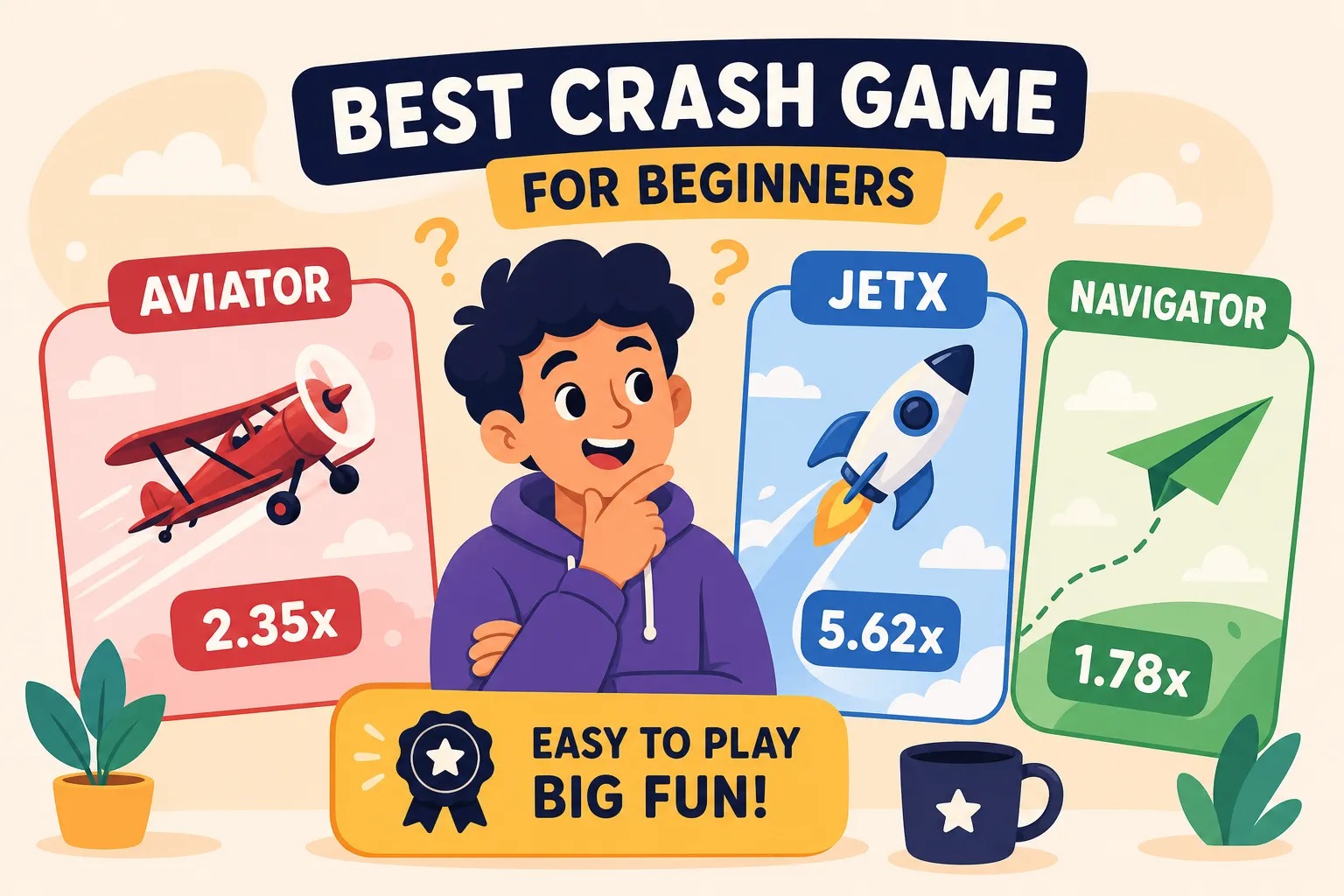
If you’re asking which popular crash game is better for new players, this guide gives you a direct answer. Most beginners land on Kwikbet, see Aviator, JetX, and Navigator sitting side by side in the crash games lobby, and have no idea where to start. All three share the same core mechanic: a multiplier climbs, you cash out before it crashes, and you walk away with winnings. That is where the similarities end.
This guide breaks down each game across four criteria: volatility, auto-cashout, minimum stakes, and learning curve. By the end, you will know which one actually fits where you are as a beginner. No guesswork, no chasing multipliers on day one.
What every beginner should understand before picking a crash game
How the crash mechanic actually works
A crash game round is deceptively simple. The round starts, a multiplier climbs from 1.00x, and you must manually cash out before the multiplier crashes to zero. If you do not cash out in time, you lose your stake. Round durations vary by game and session, some analyses report Aviator averaging around 8 to 10 seconds, while other data suggests rounds can be considerably shorter depending on where the multiplier lands. Either way, that speed is the appeal, but it is also exactly where beginners get burned: the multiplier moves fast, hesitation costs money, and the temptation to wait for a higher number is constant.
The key insight beginners miss is that most rounds end low. The multiplier distribution across all three games is heavily skewed: lots of crashes below 2x, occasional spikes into double-digit territory.
Understanding that before your first session changes how you approach each round.
The four things that separate beginner-friendly games from brutal ones
Not all crash games are equally forgiving for new players. Four factors determine whether a game will teach you good habits or drain your bankroll before you figure out the basics. Consider how each one applies to your situation before you place your first stake.
- Volatility:
how often the multiplier crashes below 2x, which directly affects how many rounds you survive on a small bankroll
- Auto-cashout:
whether the game lets you preset a target multiplier before the round starts, removing emotion from the decision entirely
- Minimum stake:
the lowest amount you can bet per round, which determines how far your starting budget stretches during the learning phase
- Learning curve:
how long it takes to understand all the features without making avoidable, costly mistakes
Keep these four criteria in mind as you read the game-by-game breakdown below. They are the only things that actually matter when you are choosing where to put your first stake.
Which popular crash game is better for new players? A game-by-game breakdown
Aviator: the crash game that set the standard
Aviator was built by Spribe and launched in 2019. It earned its top position in global crash game rankings for one reason: the interface is stripped to its essentials. One plane, one multiplier, one cashout button. There are no extra features competing for your attention during a round, and for a beginner, that matters more than it sounds. When you are still developing timing instincts, visual noise is a real problem.
The multiplier data on Aviator is the most publicly documented of any crash game. Large sample analyses show roughly 49% of rounds reach 2x or above, 32% reach 3x or higher, and only about 9.6% hit 10x or more. Most rounds end fast and low, which is exactly what beginners need to internalize before they start chasing higher multipliers.
Auto-cashout and minimum stakes on Aviator
Aviator’s auto-cashout feature is set before the round starts. You enter a target multiplier in the bet panel during the betting window, and when the live multiplier hits that number, the game cashes out automatically regardless of what you are doing. For beginners, setting auto-cashout at 1.5x or 2x removes the hesitation that burns most first-timers. You decide your exit point when you are calm, not when a climbing number is pressuring you into bad decisions.
Some operator implementations of Aviator support a dual-bet panel, meaning you can place two separate stakes in the same round with different cashout targets, one conservative bet and one higher-risk position running simultaneously. On Kwikbet, Aviator is available with minimum stakes starting at KSh 10, which gives beginners enough rounds to learn without a large deposit. The combination of clean interface, auto-cashout, and low entry point makes Aviator the default recommendation for true first-timers.
JetX: more features, slightly steeper learning curve
What makes JetX different from Aviator
JetX is built by SmartSoft Gaming and follows a nearly identical crash structure, but it wraps that structure in a rocket-launch theme with slightly more visual activity during rounds. The most notable difference for beginners is that dual-bet functionality is built directly into the core interface, not tucked into a secondary panel. Each bet has its own auto-cashout field, which adds flexibility but also introduces a decision layer that pure first-timers can find distracting early on.
JetX carries an RTP range of 96.2% to 98.9% according to SmartSoft’s published game specs, with a high volatility classification. The multiplier distribution follows the same long-tail pattern as Aviator: frequent low crashes, rare spikes into double-digit territory. The gameplay difference is not dramatic, but the interface is busier, and busy interfaces cost beginners focus at the wrong moment.
When JetX becomes the right choice for a new player
JetX is a strong choice for beginners who have already logged a few sessions on Aviator and want to experiment with split-stake strategies without switching platforms. The dual-bet setup becomes intuitive quickly once you understand the core mechanic. Setting one auto-cashout at 1.5x and one at a higher multiplier like 5x lets you protect most of your stake while keeping one position open for a larger payout.
On Kwikbet, JetX is available alongside the platform’s other crash titles, making that kind of split strategy accessible even with a small starting bankroll. Check Kwikbet’s game lobby for current minimum stake details. If you are on your first-ever session, stay with Aviator or Navigator. If you are returning for session three or four and want more strategic control, JetX earns its place in your rotation.
Navigator: Kwikbet’s standout pick for first-timers
What Navigator is and how it plays
Navigator is developed by Solidicon and follows the same crash-game framework as the others: rising multiplier, manual or auto cashout, fast rounds. Like other crash games, Navigator includes multiple bet buttons and engagement features such as live chat and promotional tools. What makes it beginner-friendly is that the core decision, when to cash out, stays front and center throughout each round. A focused interface reduces the risk of freezing at the wrong moment, which is the most common beginner mistake across all crash games.
Navigator also includes free-bet promotions that give beginners an additional safety net during the learning phase. Those bonus rounds let you observe multiplier behavior without putting your own deposit at risk on every single session.
Why Navigator on Kwikbet works especially well for first-timers
Kwikbet carries Aviator, JetX, and Navigator in one platform, operating under Kenya’s gaming regulatory framework. Beginners do not need separate accounts on multiple platforms to test each game. All three are accessible with a single deposit, and minimum stakes are low enough to give you enough rounds to build pattern recognition without depleting your bankroll. That single-lobby access is more valuable than it sounds: switching between platforms adds friction, and friction is the enemy of disciplined early-stage learning. Confirm M-Pesa availability and current minimum stakes on Kwikbet’s banking page before your first session.
Navigator is particularly worth starting with on Kwikbet because of how well it fits the low-stakes exploration mindset. Short rounds, a focused interface, and no feature overload on day one. It teaches the fundamental cashout decision without asking you to manage multiple bet panels or navigate a visually busy game screen at the same time. Once you have a handle on the basics, you have enough rounds of experience to decide whether to stay with Navigator or graduate to JetX’s split-stake system.
Side-by-side: how the three games compare where it counts
Volatility and multiplier behavior compared
All three games share the same fundamental crash architecture: a heavy concentration of results near the 1x to 2x range, with a long tail of higher multipliers that appear infrequently. Aviator has the most publicly documented multiplier distribution data, with roughly half of all rounds ending below 2x. JetX and Navigator follow the same general pattern, though comparable numeric distributions for those two titles are less widely published.
The volatility difference between the three is not dramatic enough to make one meaningfully safer than the others. What matters far more is how you use auto-cashout and how you manage your stake size per round. A disciplined 1.5x auto-cashout on any of the three games will outperform undisciplined play at any multiplier target.
Auto-cashout, minimum stakes, and learning curve: a direct comparison
Feature Aviator JetX Navigator
Auto-cashout
Yes, single + dual panel Yes, per each of two bets Yes, single field
Dual-bet option
Yes (some implementations) Yes (primary interface)
No
Learning curve Low
Medium Low Best for
True first-timers
Beginners ready to split stakes
First-timers wanting fewer decisions
Beginners who want zero complications should start with Aviator or Navigator. Those who have a session or two of experience and want to try split-stake plays should move to JetX. The table above is not a ranking of which game is “better”; it is a map of which game fits which stage of the learning curve.
How to start your first crash game session without losing your bankroll
Set your bankroll ceiling before you open the game
Decide the maximum amount you are willing to lose in a single session before you launch the game, not after. A practical starting point for crash game beginners is a session budget that covers 30 to 50 rounds at the game’s minimum stake. This gives you enough rounds to observe multiplier patterns, test auto-cashout settings, and make a few mistakes without burning through your deposit in ten minutes. On Kwikbet, with minimum stakes starting at KSh 10 on Aviator, a KSh 500 session budget covers that range comfortably.
The biggest mistake beginners make is not having a ceiling before the session starts. Once you are mid-session and have lost a few rounds, the instinct to “get it back” takes over. That instinct is where bankrolls disappear.
Three starter rules that protect new crash game players
A short set of rules in your first sessions prevents the most common beginner mistakes. These are not suggestions; they are the difference between a learning phase and an expensive lesson.
- A common beginner strategy is to set auto-cashout at 1.5x or 2x for every round until you have at least 20 sessions logged. Consistency beats optimization at this stage.
- Never increase your stake after a losing round to recover losses. This is how beginners empty accounts fast, and no crash game strategy justifies it.
- Use Kwikbet’s responsible gambling tools to set deposit and session time limits before you play your first round.
Kwikbet operates under Kenya’s gaming regulatory framework, which means player protections are built into the platform. Minimum stakes are low enough to give you enough rounds to develop real pattern recognition, and all three crash games are live in the same lobby. Start with Navigator or Aviator, keep your auto-cashout set low, and treat your first ten sessions as tuition, not income. That mindset shift changes everything about how you develop as a crash game player.
Which game should you actually start with?
Choosing the right crash game comes down to one question: how many decisions do you want to make per round? Aviator and Navigator keep it simple with focused interfaces and a single auto-cashout field, making them the strongest picks for absolute beginners. JetX adds dual-bet functionality that rewards slightly more experienced players who want to split risk across two positions in the same round.
So which popular crash game is better for new players? For absolute beginners, Aviator and Navigator are the safest starting points. The multiplier volatility across all three is similar: expect most rounds to end before 2x, with occasional higher flights that will tempt you to wait longer than you should. Resist that temptation in your early sessions. Start on Kwikbet where all three crash games sit on one licensed platform, confirm your deposit method on the banking page, set your auto-cashout before the round starts, and keep your stake low until the timing instinct becomes second nature. The games are not going anywhere, and neither are the higher multipliers. Build the fundamentals first.
Frequently asked questions: crash games for beginners
Is there a demo mode for crash games like Aviator or JetX?
Some platforms offer demo mode crash game access that lets you practice without wagering real money. If a demo option is available on Kwikbet for any of the three titles, use it before your first real-money session. It is the fastest way to build timing instincts at zero cost.
Are these crash games provably fair?
Aviator uses a provably fair crash mechanic backed by a cryptographic seed system, meaning the outcome of each round can be independently verified after it completes. This provably fair crash design is a meaningful trust signal for beginners who want confirmation that results are not manipulated. JetX operates under SmartSoft’s certified RNG, and Navigator runs on Solidicon’s framework, both subject to their respective regulatory oversight.
How does Kwikbet compare to other crash game platforms for new players?
Kwikbet’s advantage for Kenyan beginners is platform consolidation: Aviator, JetX, and Navigator in one lobby with local deposit support. Other platforms may carry one or two of these titles, but switching between sites to compare games adds friction that slows down the learning process. For a beginner focused on building fundamentals, fewer platforms and more focused practice sessions are almost always the better choice.